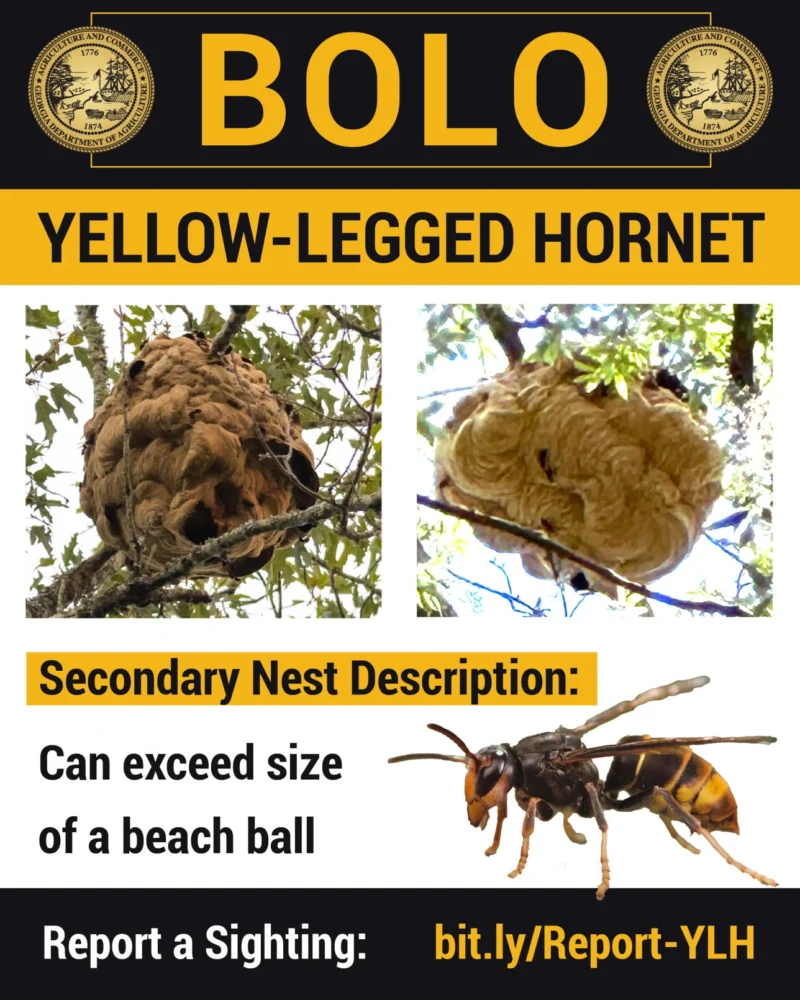

The Georgia Department of Agriculture is asking residents across the state to remain alert for signs of the invasive yellow-legged hornet as officials work to stop the species from becoming established in Georgia.
Agriculture Commissioner Tyler J. Harper said the department is especially urging residents in Bryan, Bulloch, Chatham, Effingham and Liberty counties to be on the lookout for large secondary nests, as the hornets enter a critical stage of their life cycle.
According to the department’s Plant Protection Division, increased “hawking” activity has been observed around honeybee hives, signaling that yellow-legged hornet colonies are entering their secondary nesting phase. Hawking occurs when hornets hover near beehives and prey on honeybees as they return to the hive, posing a significant threat to pollinators and the state’s agricultural industry.
Secondary nests can grow larger than a beach ball and are typically found high in trees or other elevated locations. The nests are generally gray or brown in color and are constructed from layered, paper-like material. Depending on weather conditions, they may remain visible from late summer through the winter months.
State officials encourage residents to watch for hawking activity around beehives, particularly during the morning hours before noon and again after 5 p.m. Anyone who believes they have located a yellow-legged hornet nest is urged not to attempt to remove it themselves.
Instead, residents should report suspected nests to the Georgia Department of Agriculture’s Plant Protection Division at [email protected] or contact a licensed pest management professional to ensure the queen is properly eradicated.
“Georgia has made significant progress in tracking and eliminating the Yellow-legged Hornet, but our success depends on continued public support,” Commissioner Harper said. “The sooner a nest is identified and reported, the sooner our team can respond. We are asking every Georgian to remain vigilant and help us keep this invasive species from gaining a foothold in our state.”
The Georgia Department of Agriculture says public awareness and prompt reporting are essential to preventing the invasive pest from spreading further across the state.